 MUSE
MUSE
The Social Toy: How Designer Toy Communities Are Taking Shape Across the GCC
The 147-Message Morning
By 9:17 a.m. on a Thursday, a Dubai-based designer toy WhatsApp group had exchanged 147 messages. Someone in JLT had pulled a duplicate from the latest Dumia Cute Beast Series and was offering a trade. A collector in Abu Dhabi had just received a Forest Galaxy Tales blind box order and was posting an unboxing sequence photo by photo. Someone else — username: OwlCollectorDXB — had found a rare chase variant at 2 a.m. and the emoji reactions were still coming in.
None of these people had met each other six months ago. The group itself didn’t exist at the start of the year. What brought them together was not a shared workplace, a university cohort, or a neighbourhood — it was designer toys. Specifically, the moment each of them realised they were collecting alone and wanted to stop.
This is the story unfolding across the Gulf right now. Not the story of what people are buying — the blind boxes, the plush keychains, the desktop figures — but the story of who they are becoming in the process. Collectors. Traders. Curators. And increasingly, a genuine community.
The Group Chat as Infrastructure
Ask any GCC collector how they found their people and the answer almost always begins the same way: “There was this WhatsApp group.”
These groups are the invisible plumbing of the regional designer toy scene. They operate on word of mouth — you get added by someone who saw your Instagram feed, or your TikTok unboxing, or spotted the Shuya Cream Puff Bunny dangling from your bag at a café in City Walk. Once inside, the rhythm is unmistakable: trade offers posted with photos and location tags, “mail call” reveals of deliveries that just arrived, questions about where to source specific series, and — most consistently — the quiet camaraderie of people who have finally found others who get it.
The groups are geographically specific and practically minded. A Riyadh group functions differently from a Dubai one because shipping routes, delivery timelines, and available stock differ. But the shared grammar is the same across cities: collectors helping collectors navigate a market that, until recently, offered almost no local infrastructure for this hobby.
MUSE entered this landscape as the GCC’s first professional designer toy channel — Dubai-based, with ready stock and 2-5 day delivery across the Gulf. That matters in practical terms, but it also matters in cultural ones: a local distributor means the conversation shifts from “how do I ship this from overseas” to “what should I open next.”
Instagram: The Gallery Wall the Region Never Had
If WhatsApp groups are the backchannel, Instagram is the exhibition space.
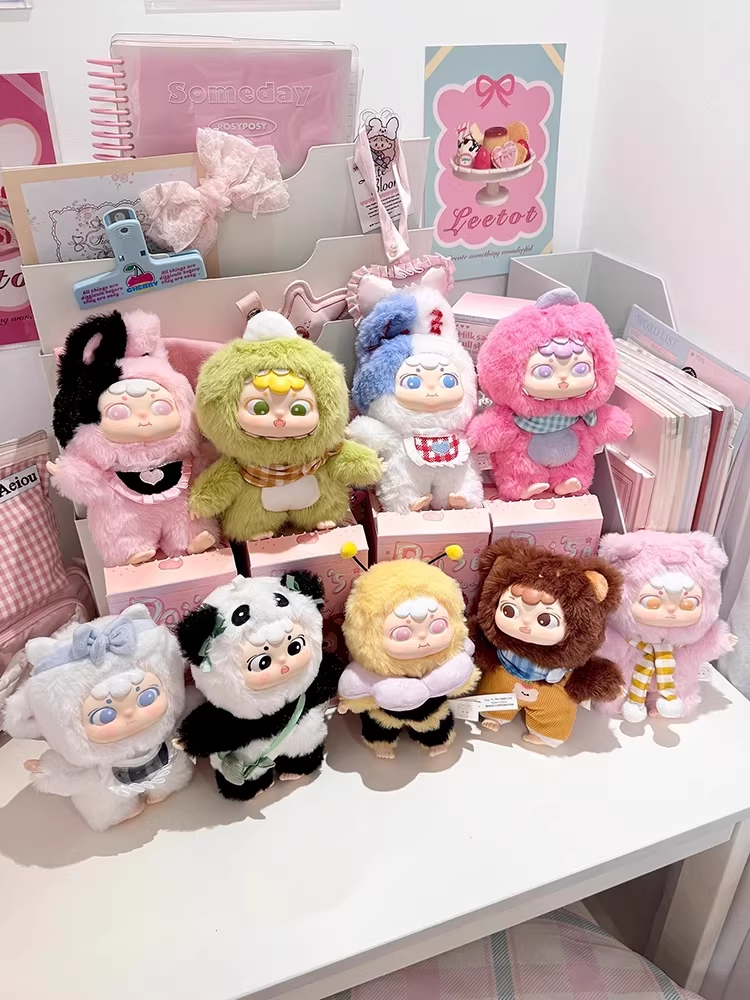
GCC collector accounts have developed a distinct visual language. It borrows from the global designer toy aesthetic — flat lays, shelfies, unboxing reels — but layers in something specific to the region: the play of natural light through floor-to-ceiling apartment windows, the contrast between a diminutive kawaii figure and the glass-and-steel skyline visible behind it, the way a carefully arranged display shelf sits against a Dubai or Abu Dhabi interior.
The Maytree Forest Galaxy Tales series — with its dreamy, celestial palette — photographs especially well in this context. Its translucent effects and soft colour gradients look built for the golden-hour light that Gulf collectors seem to instinctively shoot in. These are not accidental aesthetics. They reflect a generation of collectors who understand that the presentation of a collection is part of the collecting itself. As we explored in our piece on styling designer toys at home, the shelf has become a deliberate creative act — and Instagram is where those acts go public.
Collector accounts also serve a discovery function. A well-tagged post featuring the Maytree Zodic Doodle keychain series — zodiac-themed charms that double as low-stakes conversation starters — can lead a casual browser down a rabbit hole that ends with them joining three WhatsApp groups and pre-ordering their first full blind box series. The pipeline from Instagram curiosity to active collecting is short, visual, and community-driven.
TikTok and the Theatre of the Unboxing
If Instagram is the gallery, TikTok is the live performance.
Unboxing content on TikTok has become its own micro-genre in the GCC. The format rewards personality and reaction — the genuine gasp when a chase variant appears, the mock-despair of yet another duplicate, the ASMR-adjacent sound of a foil pouch crinkling open. These are low-production, high-authenticity videos that perform disproportionately well because they feel like being in the room with another collector.
The Shining Cardsprites series, with its fantasy-themed character designs and distinctly tradeable format, has become a recurring star of these videos. Each figure in the series carries enough visual personality to anchor a 30-second reveal, and the chase variants — rarer, more detailed — create exactly the kind of payoff moment the format demands.
What makes the GCC unboxing scene distinct is the speed at which it is maturing. Six months ago, most TikTok toy content in the region was reposted from East Asian or Western creators. Today, a growing number of Dubai, Abu Dhabi, and Riyadh-based accounts are producing original unboxing content — and they are doing it in Arabic and English, for audiences that were underserved until very recently.
From Screens to Rooms: The Rise of IRL Meetups
The logical endpoint of all this digital community-building is the physical meetup, and these are beginning to happen with increasing regularity across the Gulf.
The format tends toward the informal: a group of eight to fifteen collectors meeting at a café, trays of figures spread across a table, trades negotiated in person. The Dumia Cute Beast Series — compact, recognisable, and widely collected — frequently anchors these trading tables. Its accessible price point and broad appeal make it a natural common denominator, the series that most people in the room will own at least a few figures from.
What is striking about these gatherings is how quickly the conversation moves beyond the toys themselves. The figures are the entry point. What follows is the kind of connection that forms when people discover they share not just an interest but a sensibility. These are people who find something genuine in the small, the crafted, the deliberately charming — and who have, until now, had few places to express that outside their own homes.
The comfort collecting phenomenon we wrote about earlier finds its social expression here: the same impulse that leads someone to place a Shuya Cream Puff Bunny on their desk is the one that leads them to seek out others who understand why that matters.
What Comes Next
Designer toy communities in the GCC are still in their early chapters. There are no large-scale conventions yet, no dedicated retail spaces, no established trading platforms. But the foundations are unmistakably in place.
The composition of these communities is worth noting. They skew young, bilingual, and digitally fluent — a consumer behaviour that did not exist in the region at meaningful scale five years ago and now supports a growing ecosystem of collectors, content creators, and traders.
As the GCC’s first professional designer toy channel, MUSE was built to serve this community at the infrastructure level — with Dubai-ready stock, Gulf-wide delivery, and a catalogue that reflects what regional collectors are actually excited about. But the most interesting thing happening in this space is not the supply chain. It is the social fabric that is forming around the product.
Whether you are deep into your third blind box series or simply curious about what all those WhatsApp notifications are about, there is a community waiting. The group chat is open.
Explore the collection at toys.aimuse.ae. Contact us via WhatsApp to join the conversation.
Get in Touch