 MUSE
MUSE
AI-Powered Designer Toys Are No Longer Science Fiction — LULUYA Proves They Are Already on Dubai Shelves

The Duck That Talks Back
Let us begin with the Stress Release Duck — because it is, in its own way, the most radical object Maytree has ever produced.
At first glance, it reads as a familiar designer toy: a rounded, slightly quizzical duck rendered in soft vinyl, with the kind of exaggerated proportions that make you want to squeeze it. But the LULUYA Stress Release Duck (AI51000) is not merely a stress toy. It contains an embedded AI module that responds to interaction — squeezing, tapping, holding — with a range of vocal and haptic feedback. It can laugh. It can sigh. It can produce a sound that is best described as the audio equivalent of a shrug. And it does all of this without a screen, without an app, without any interface beyond the physical object itself.
This is, in miniature, the thesis of Maytree’s LULUYA series: that AI does not need to live inside phones and laptops. It can live inside the objects we already collect, already display, already reach for when we need something to fidget with. The LULUYA series — comprising the AI-Powered Blind Box (AI50800, 15CM) and the Stress Release Duck (AI51000) — represents the first systematic attempt by a major designer toy brand to integrate genuine AI interactivity into collectible figures at an accessible scale.
What “AI-Powered” Actually Means — and What It Does Not
The term “AI-powered” has been stretched to meaninglessness across consumer electronics. A coffee machine with a timer calls itself AI. A lamp that changes colour on a schedule claims intelligence. The LULUYA series sidesteps this inflation by doing something genuinely novel: embedding a purpose-built behavioural model directly into the figure’s hardware, with no cloud connection required.
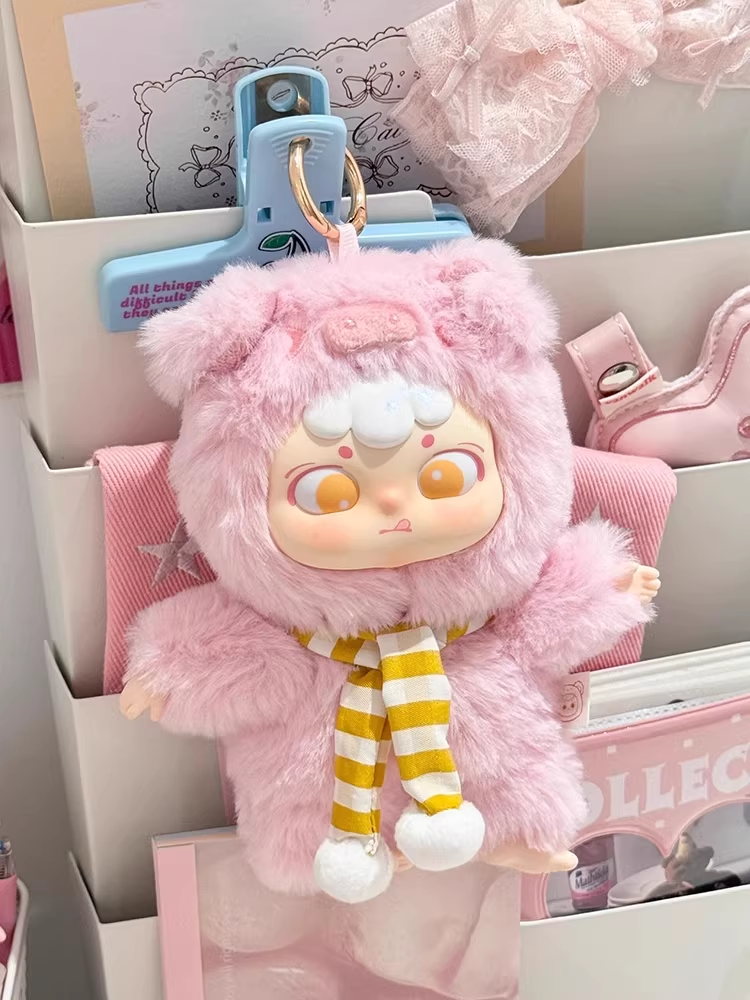
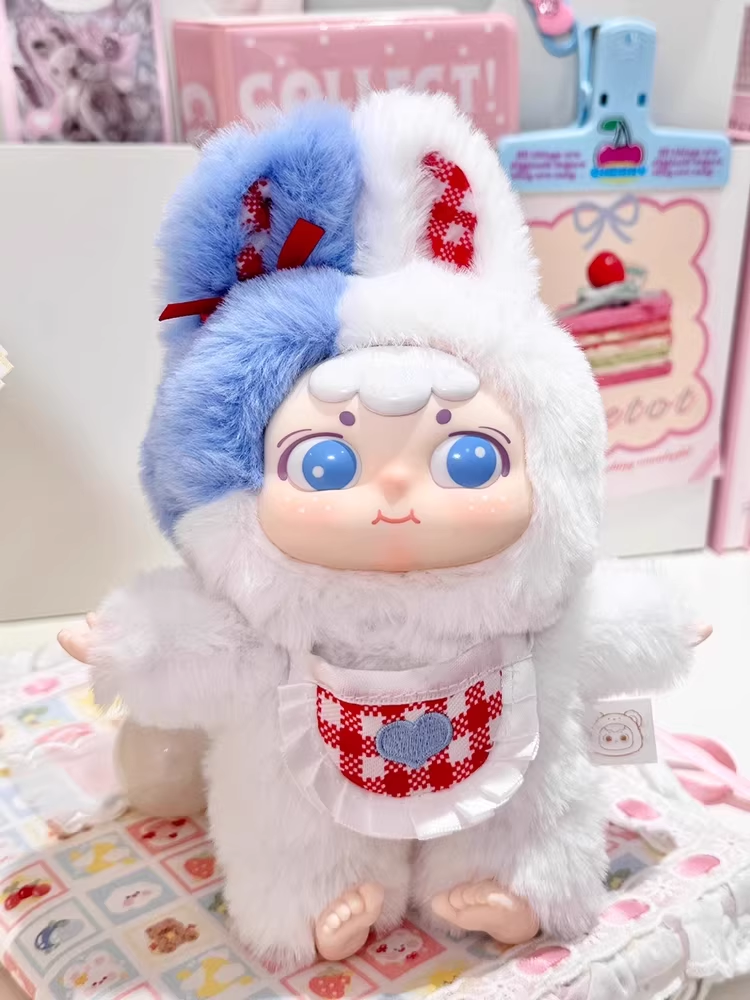
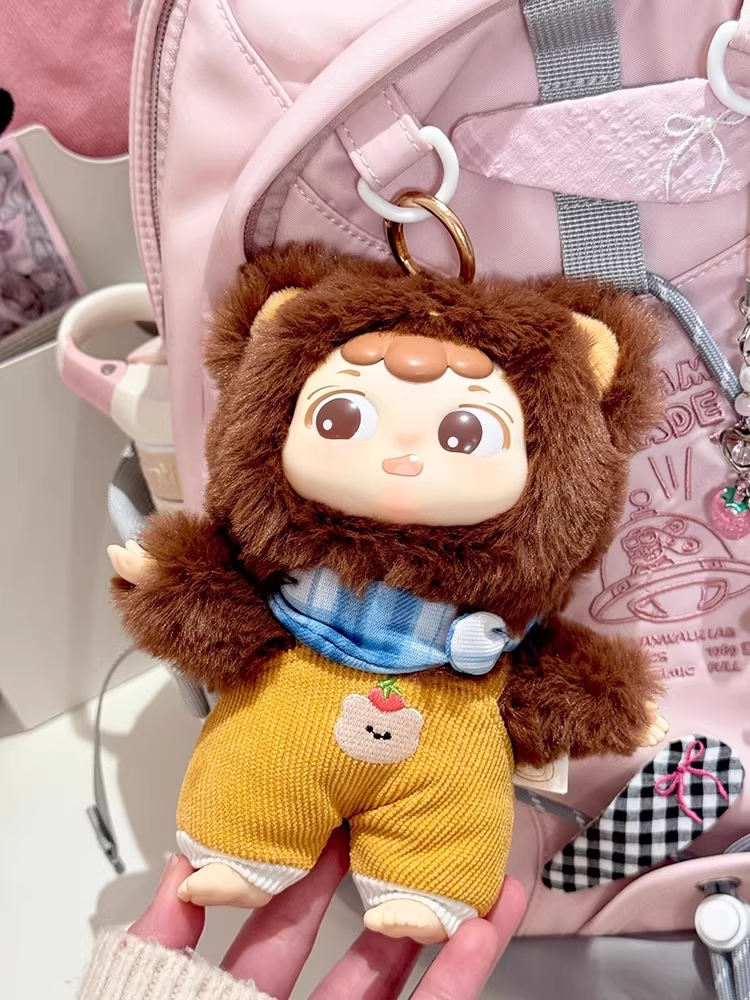
The 15CM AI-Powered Blind Box figures each contain a small processor, a speaker, a haptic actuator, and a suite of sensors — primarily pressure and motion. The AI layer sits on top of these inputs, interpreting patterns rather than isolated events. A single squeeze triggers one response. A series of rapid squeezes triggers another. Leaving the figure untouched for an extended period might cause it to emit a small sound of its own accord — a yawn, a questioning chirp — as though it has noticed your absence.
This is not a chatbot stuffed into a toy. It is a behavioural system designed to create the illusion of a personality that lives inside an object. The distinction matters. A chatbot demands language and attention. A LULUYA figure simply coexists with you, occasionally reminding you that it is there.
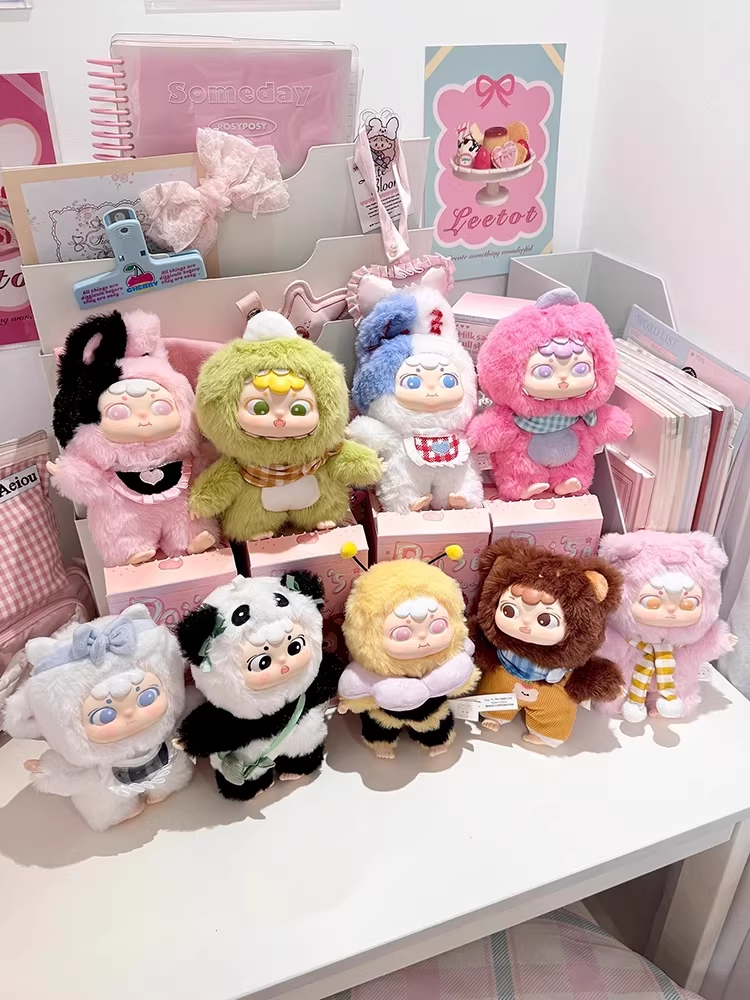
The blind box format applies here as it does in traditional series — each figure in the AI50800 line has a distinct base personality, with variations in vocal tone, response patterns, and idle behaviours. The unboxing experience is correspondingly more layered: you are not just discovering which character you received, but which personality came inside it.
Why This Matters for the GCC Collectibles Market
The GCC’s technology adoption rates are among the highest in the world. Dubai’s smart city infrastructure, Saudi Arabia’s NEOM ambitions, and the region’s general comfort with AI as a cultural conversation — it all creates an environment where an AI-powered collectible does not feel like a gimmick. It feels like a natural evolution.
This is fundamentally different from how such products land in markets where AI is still viewed with suspicion or where the conversation around smart devices is dominated by privacy anxiety. In the Gulf, the question is not “do we trust AI” — it is “what else can AI do?” A designer toy that responds to touch, develops a behavioural signature over time, and becomes — in a limited but genuine sense — more “yours” the longer you own it, fits squarely into that cultural appetite for technological novelty.
The LULUYA series also arrives at a moment when the GCC’s collectibles market is undergoing a generational shift. Younger collectors — those who grew up with smartphones in hand and smart speakers in their living rooms — are not satisfied with static objects. They want objects that participate in their environment. A vinyl figure that sits silently on a shelf is a possession. A vinyl figure that chirps when you walk past is a presence.
The Engineering Behind the Charm
Credit where it is due: the hardware integration in the LULUYA series is more sophisticated than the toy category typically demands. The AI module is fully self-contained — no Bluetooth pairing, no companion app, no firmware updates required. Power is supplied by a replaceable cell battery with a lifespan measured in months rather than hours (a critical detail for collectors who do not want their display pieces to become electronic waste after a week of interaction).
The speaker is deliberately lo-fi — not because of cost constraints, but because high-fidelity audio would break the illusion. A duck that speaks in crystal-clear studio quality sounds like a gadget. A duck that emits sounds through a tiny speaker that colours the audio with a faint warmth sounds like a creature. This is not an accident. It is one of several design choices that suggest Maytree’s product team understood from the beginning that they were building characters, not hardware.
The pressure sensors have been calibrated with what can only be described as emotional intelligence. A gentle squeeze produces a contented murmur. A hard squeeze produces a startled squawk. Sustained holding — cradling the figure in two hands without squeezing — can trigger what early reviewers have described as a “purring” response, a low rhythmic pulse through the haptic motor that transforms the object from a display piece into something closer to a companion.
The Collecting Psychology of Interactive Objects
Traditional blind box collecting operates on three psychological levers: the thrill of randomness, the satisfaction of completion, and the social currency of rarity. Interactive objects add a fourth lever: attachment through interaction.
A static figure, no matter how beautifully designed, maintains a fixed relationship with its owner. You look at it. You admire it. You occasionally reposition it. But the relationship is one-directional. The LULUYA series introduces a feedback loop. The figure responds to you. It develops — within the bounded parameters of its programming — a behavioural history. Over days and weeks, it becomes more than an object you own. It becomes something you have a relationship with.
This has implications for the secondary market that are not yet fully understood. Does an interactive figure that has “learned” from a previous owner retain more value or less? Is the absence of cloud connectivity — which means personality data cannot be transferred or reset — a bug or a feature? These are questions the collecting community is just beginning to ask, and the LULUYA series is the test case.
Displaying Interactive Collectibles
The LULUYA figures introduce new considerations for how collectors display their pieces. Sound-emitting objects need to be placed where their occasional chirps and murmurs contribute to the atmosphere rather than disrupt it. Some early adopters have reported that grouping multiple LULUYA figures together creates a kind of ambient call-and-response effect, with one figure’s idle sound occasionally triggering responses from others nearby — an emergent behaviour that Maytree has neither confirmed nor denied is intentional.
The 15CM scale means LULUYA figures integrate naturally into existing display arrangements. They do not demand a dedicated shelf or a special environment. They coexist with static figures, adding a layer of unpredictability to a display that might otherwise feel frozen in time.
Where This Is Heading
The LULUYA series is, by any reasonable measure, a first-generation product. The AI behaviours are charming but bounded. The hardware will certainly improve in future iterations. Battery life, speaker quality, sensor sensitivity — every technical dimension has room to grow.
But the conceptual breakthrough has already happened. LULUYA demonstrates that AI does not need to be the main event. It can be a texture — something that adds depth to an object whose primary value is still aesthetic and emotional. The duck is not compelling because it has AI inside it. It is compelling because it is a beautifully designed duck that happens to notice when you are nearby.
For Dubai’s collectors, the LULUYA series is available now through MUSE Trendy Toy. The AI-Powered Blind Box (AI50800) and Stress Release Duck (AI51000) represent the first wave of what is likely to become an entire category of interactive designer toys. The early adopters are already unboxing. The question is whether their figures have noticed yet.
Discover the LULUYA series and the full Maytree collection at MUSE Trendy Toy — the GCC’s leading designer toy destination, bringing the future of collectibles to Dubai with ready stock and 2-5 day delivery across the region.
Get in Touch